
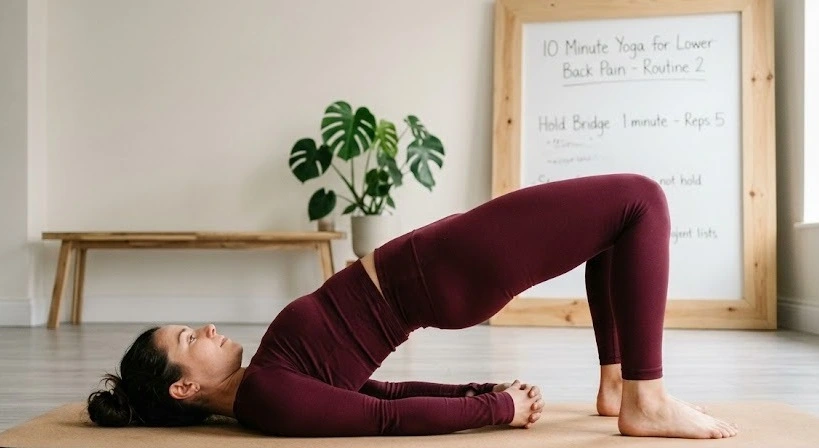
10 minute yoga for lower back pain is a time-efficient sequence of targeted yoga postures designed to alleviate discomfort, improve flexibility, and support spinal alignment. It focuses on controlled movements, breath coordination, and gentle stretching of key muscle groups such as the lumbar extensors, hamstrings, and hip flexors. Can a short daily routine significantly reduce chronic stiffness? Clinical guidance suggests it can when practiced consistently.
Key Takeaways
- A 10 minute routine effectively targets lower back pain relief
- Breathing techniques enhance relaxation and effectiveness
- Combines stretching, strengthening, and controlled breathing
- Suitable for beginners and home practice
- Consistency is critical for long-term benefits
What is a 10 minute yoga for lower back pain routine and how does it work?
A 10 minute yoga for lower back pain routine works by combining mobility exercises, static stretches, and controlled breathing to reduce muscular tension and improve circulation.
Mechanisms involved:
- Muscle relaxation: Reduces spasms in the lumbar region
- Improved blood flow: Enhances nutrient delivery to tissues
- Spinal decompression: Gentle elongation reduces pressure on discs
Clinical relevance:
- Recommended in non-invasive back pain management protocols
- Often aligned with physiotherapy and rehabilitation practices
Which poses are included in a 10 minute yoga for lower back pain sequence?
A 10 minute yoga for lower back pain sequence typically includes foundational poses targeting the lower spine and hips.
Standard sequence (10 minutes):
- Cat-Cow Stretch (1–2 min) – Improves spinal mobility
- Child’s Pose (1 min) – Relieves lumbar compression
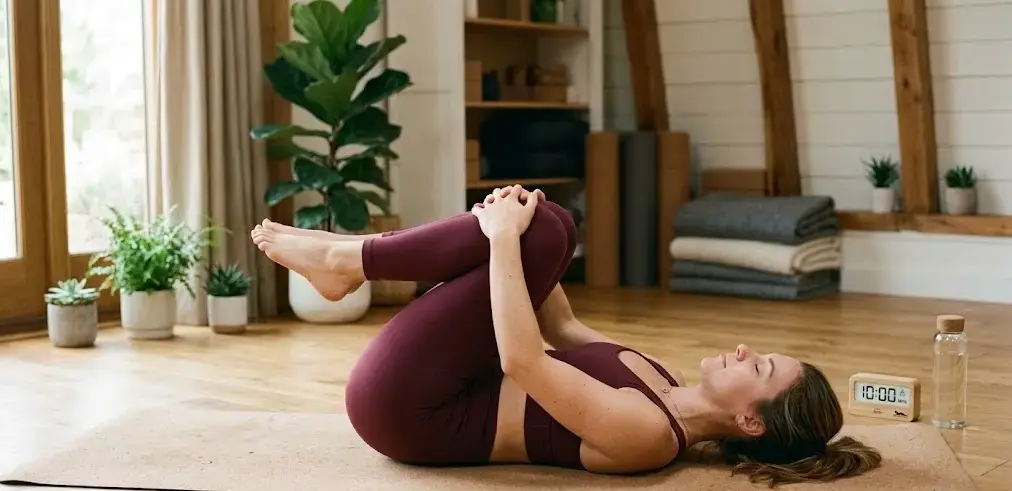
- Knees-to-Chest (1 min) – Reduces lower back tension
- Supine Twist (2 min) – Enhances spinal rotation
- Bridge Pose (2 min) – Strengthens glutes and supports spine
- Seated Forward Fold (2 min) – Stretches hamstrings
- Relaxation (1 min) – Promotes neuromuscular recovery
How should breathing be coordinated in a 10 minute yoga for lower back pain routine?
A 10 minute yoga for lower back pain routine becomes more effective when synchronized with controlled breathing techniques, which enhance muscle relaxation and spinal mobility.
Recommended breathing technique:
- Diaphragmatic breathing (deep belly breathing):
Take a deep inhale through the nose, expanding the belly; exhale slowly with a mild core engagement, aligning your breathing with the poses. - Pose-wise breathing coordination:
- Cat-Cow Stretch: Inhale while arching (Cow), exhale while rounding (Cat)
- Child’s Pose: Maintain slow nasal breathing to release tension
- Knees-to-Chest: Exhale as knees draw closer to the chest
- Supine Twist: Inhale to lengthen spine, exhale to deepen the twist
- Bridge Pose: Inhale to lift hips, exhale to stabilize
- Forward Fold: Exhale while folding, inhale to maintain length
Physiological benefits:
- Activates the parasympathetic nervous system, reducing stress
- Improves oxygen delivery to lumbar muscles
- Enhances stretch tolerance and reduces stiffness
Best practice guidelines:
- Maintain slow, rhythmic breathing (4–6 seconds per cycle)
- Avoid breath holding during transitions
- Prefer nasal breathing for better control
How does a 10 minute yoga for lower back pain benefit beginners?
A 10 minute yoga for lower back pain routine is suitable for beginners due to its low intensity and adaptability.
Key beginner benefits:
- Minimal equipment required
- Low risk of injury when performed correctly
- Gradual improvement in flexibility and posture
Best practices:
- Maintain neutral spine alignment
- Avoid overstretching beyond comfort
- Use props like cushions or yoga blocks if needed
How often should you practice a 10 minute yoga for lower back pain routine?
A 10 minute yoga for lower back pain routine is most effective when practiced consistently.
Recommended frequency:
| Experience Level | Frequency | Duration |
| Beginner | 3–4 times/week | 10 minutes |
| Intermediate | Daily | 10–15 minutes |
| Chronic pain | As advised by therapist | Controlled sessions |
Practice note:
Regular adherence aligns with general musculoskeletal health recommendations for mobility and pain reduction.
What precautions should be followed during a 10 minute yoga for lower back pain?
A 10 minute yoga for lower back pain routine must be performed with attention to safety and body awareness.
Precautions:
- Avoid deep forward bends during acute pain
- Stop immediately if sharp or radiating pain occurs
- Maintain controlled, slow movements throughout
Contraindications:
- Severe spinal injuries
- Post-surgical recovery without medical clearance
Can a 10 minute yoga for lower back pain help with related conditions?
A 10 minute yoga for lower back pain routine may also support adjacent conditions involving the hips and nerves.
Applicable conditions:
- Mild sciatica
- Hip stiffness
- Postural imbalances
This topic is often discussed alongside 5 minute yoga routines, yoga for sciatica relief, and beginner-friendly home back pain exercises.
Conclusion
A 10 minute yoga for lower back pain routine provides a structured, evidence-supported approach to managing discomfort through mobility, stretching, and breath control. Its classification as a low-impact therapeutic method makes it suitable for consistent daily use. For a more comprehensive and long-term approach, explore Yoga therapy for lower back pain relief to deepen results and improve spinal health outcomes.
FAQ
What are the big 3 exercises for lower back pain?
The Big 3 include the curl-up, side plank, and bird-dog, focusing on core stability and spinal support.
How to fix lower back pain with yoga?
Consistent practice of targeted poses with controlled breathing improves flexibility, reduces tension, and supports spinal alignment.
What is the single best exercise for lower back pain?
The bird-dog exercise is widely recommended for stabilizing the spine and improving core strength.
Can beginners do yoga for lower back pain safely?
Yes, beginners can perform modified poses with proper alignment and controlled breathing.
How long does it take to see results?
Noticeable improvement typically occurs within 2–4 weeks of consistent practice.
Sources
https://www.youtube.com/watch?v=4mUyca7LKAw
https://www.youtube.com/watch?v=2eA2Koq6pTI
https://www.youtube.com/watch?v=Xg_EbPALVZ0
https://www.yogajournal.com/practice/yoga-sequences/10-minute-sequence-ease-back-pain/
https://www.youtube.com/watch?v=ZDiyOGM9zrk
https://www.youtube.com/playlist?list=PLui6Eyny-UzywNCo0zRu9dduvlNXzfDyk
https://www.healthline.com/health/fitness-exercise/yoga-for-back-pain
https://www.youtube.com/watch?v=ew3YHoN1Igg
https://www.mayoclinic.org/healthy-lifestyle/adult-health/in-depth/back-pain/art-20546859
https://www.youtube.com/watch?v=HZ5GNs0HTqw