
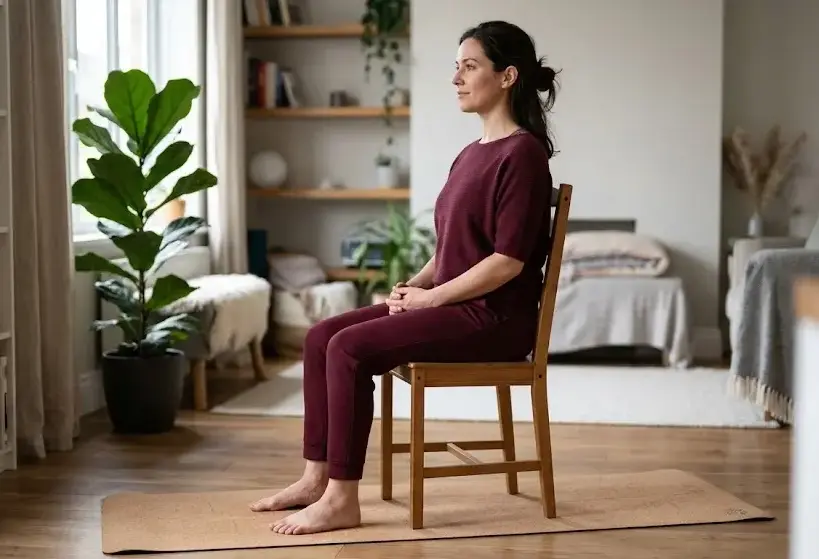
How to sit correctly with back pain during work means adopting a seated posture that maintains the natural curve of the spine while minimizing stress on muscles and discs. Poor sitting habits are directly linked to chronic lower back pain and workplace injury. What adjustments actually reduce strain and improve comfort over long work hours?
Key Takeaways
- Maintain neutral spine alignment while sitting
- Use the 90-90-90 rule for proper joint positioning
- Adjust chair, desk, and monitor ergonomically
- Avoid slouching and prolonged static posture
- Take regular breaks to reduce spinal stress
- Practice diaphragmatic breathing to reduce muscle tension
- Use supportive tools like lumbar cushions
What is the correct posture for how to sit correctly with back pain during work?
How to sit correctly with back pain during work requires neutral spine alignment and balanced weight distribution.
Key posture elements:
- Keep feet flat on the floor or footrest
- Knees aligned with or slightly below hips
- Maintain a slight inward curve in the lower back (lumbar lordosis)
- Relax shoulders and keep elbows close to the body
- Position head directly over shoulders (avoid forward head posture)
Workplace standard:
Workplace ergonomics principles support neutral spine posture to limit disc stress and avoid muscle fatigue.
How should your chair and desk be adjusted for back pain?
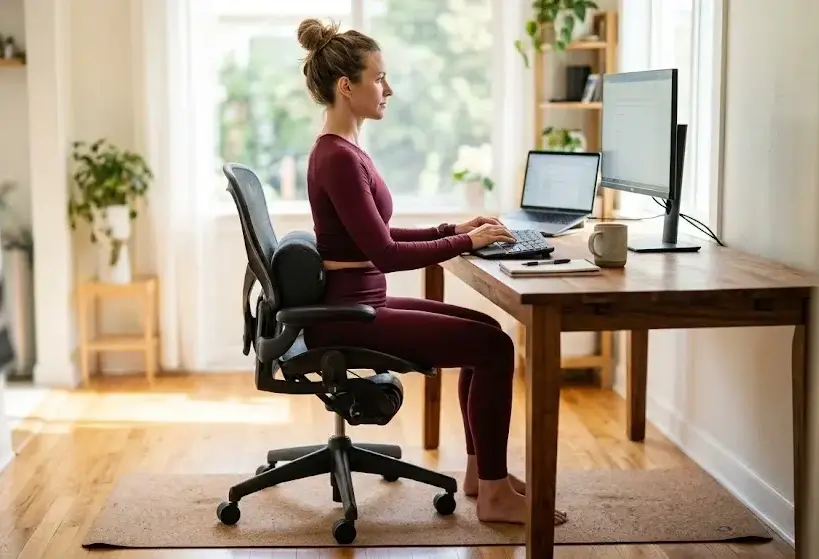
How to sit correctly with back pain during work depends heavily on workstation setup.
| Component | Recommended Adjustment |
| Chair height | Feet flat, thighs parallel to floor |
| Lumbar support | Supports natural lower back curve |
| Desk height | Elbows at 90 degrees |
| Monitor level | Top of screen at eye level |
| Keyboard/mouse | Within easy reach, wrists neutral |
Industry practice:
Ergonomic chairs with adjustable lumbar support are widely used in corporate environments to reduce lower back strain.
What is the 90-90-90 rule and how does it help?
How to sit correctly with back pain during work is often simplified using the 90-90-90 rule.
Definition:
- Hips at 90°
- Knees at 90°
- Elbows at 90°
Benefits:
- Promotes even load distribution
- Reduces pressure on spinal discs
- Improves circulation during prolonged sitting
This rule is commonly recommended in physiotherapy and occupational health guidelines.
What are the worst sitting positions for back pain?
How to sit correctly with back pain during work also involves avoiding harmful positions.
Common harmful habits:
- Slouching or rounded back posture
- Sitting on the edge of the chair without support
- Crossing legs for long periods
- Leaning forward toward the screen
- Sitting for extended periods without movement
Impact:
These positions increase spinal disc pressure and can lead to conditions such as lumbar strain or nerve compression.
How often should you move or change position during work?
How to sit correctly with back pain during work includes regular movement to prevent stiffness.
Recommended schedule:
- Stand or stretch every 30–45 minutes
- Take short walking breaks every 1–2 hours
- Perform micro-movements (shoulder rolls, back extensions)
Example workplace practice:
- These desks promote movement by enabling changes in posture, reducing sustained physical strain.
- Related context: Sitting posture is often discussed alongside topics like lower back pain when sitting but not standing, best floor sitting positions, and exercises for back pain from long sitting hours.
What breathing techniques help reduce back pain while sitting?
How to sit correctly with back pain during work can be improved by integrating controlled breathing techniques that reduce muscle tension and support spinal stability.
Recommended breathing method: Diaphragmatic (deep) breathing
- Sit upright with lumbar support
- Place one hand on your abdomen and one on your chest
- Inhale slowly through the nose, expanding the abdomen (not the chest)
- Exhale gently through the mouth, allowing the abdomen to fall
- Repeat for 5–10 breaths every 30–60 minutes
Benefits:
- Reduces tension in back and shoulder muscles
- Improves oxygen delivery to spinal tissues
- Enhances core stability by engaging deep abdominal muscles
- Helps prevent upper back pain caused by shallow breathing patterns
Clinical insight:
Breathing control is commonly incorporated in physiotherapy and rehabilitation programs to support posture correction and pain management.
What additional supports or tools improve sitting posture?
How to sit correctly with back pain during work can be enhanced using ergonomic aids.
Useful tools:
- Lumbar support cushions
- Footrests
- Adjustable chairs
- Sit-stand desks
- Monitor risers
Clinical guidance:
Supportive devices are often prescribed in physiotherapy to maintain alignment and reduce muscular strain.
Conclusion
How to sit correctly with back pain during work is a structured approach combining posture alignment, ergonomic setup, movement frequency, and controlled breathing techniques. Applying standardized principles such as the 90-90-90 rule alongside diaphragmatic breathing can significantly reduce discomfort and improve spinal health over time. For complementary recovery strategies, consider integrating movement-based routines such as Best yoga poses for herniated disc beginner.
FAQs
How to sit at work to avoid back pain?
Sit with a straight back, feet flat on the floor, and maintain lumbar support while keeping elbows and knees at 90 degrees.
What is the 90-90-90 sitting rule?
It refers to keeping hips, knees, and elbows at 90-degree angles to promote ergonomic alignment.
What sitting position is best for back pain?
Proper posture is defined by a neutral spine, effective lumbar support, and feet flat on the ground.
What are the first signs of L4 L5 compression?
Early signs include lower back pain, numbness in legs, tingling sensations, and weakness in the lower limbs.
Can sitting too long cause back pain?
Long durations of sitting elevate spinal load and reduce muscle flexibility, increasing the risk of persistent back pain.
Sources
https://www.uclahealth.org/medical-services/spine/patient-resources/ergonomics-prolonged-sitting
https://my.clevelandclinic.org/health/articles/4290-low-back-pain-coping
https://www.youtube.com/watch?v=EPGdQLjcmD8
https://www.sribalajihospital.com/lower-back-pain-best-sitting-posture/
https://www.isppcenter.com/blog/tips-for-office-workers-to-avoid-back-pain
https://www.goodrx.com/well-being/movement-exercise/lower-back-pain-prevention?srsltid=AfmBOopparkJ7ywnOlrdY511O44KRqKGvsaQkhXQZc3SjU4Ex9a-eOm0
https://krsnaphysioplus.com/blogs/how-to-manage-back-pain-during-work-from-home/
https://thecoreinstitutemi.com/sit-at-a-desk-five-tips-to-prevent-neck-back-pain-at-work-school-or-home/