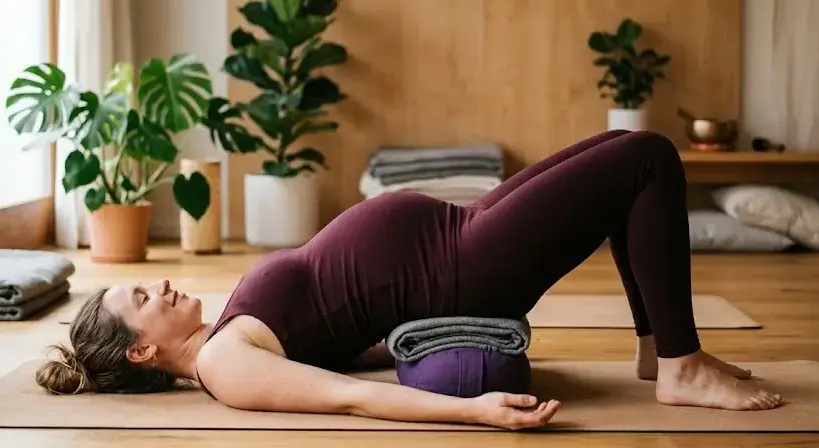
Yoga for lower back pain during pregnancy UK is a prenatal exercise method that combines gentle stretches, posture correction, and breathing techniques to reduce lumbar discomfort. Lower back pain commonly arises due to biomechanical and hormonal changes during pregnancy. Can combining movement with controlled breathing improve both physical comfort and pain perception?
Key Takeaways
- Combining yoga and breathing improves pain relief outcomes
- Diaphragmatic and counted breathing are safest options
- Avoid breath retention and overexertion
- Follow NHS-aligned safety guidelines
- Consistency enhances effectiveness
What causes lower back pain during pregnancy in the UK?
Yoga for lower back pain during pregnancy UK targets pain linked to physiological and structural changes.
Primary causes include:
- Increased spinal curvature (lordosis)
- Hormonal ligament relaxation (relaxin)
- Forward shift in body weight
- Reduced abdominal muscle support
Clinical classification:
| Type of Pain | Description | Common Stage |
| Lumbar pain | Central lower back discomfort | All trimesters |
| Pelvic girdle pain | Pain around hips and sacrum | Second–third trimester |
Which yoga poses are safest for lower back pain relief?
Yoga for lower back pain during pregnancy UK emphasises stability and controlled movement.
Reommended poses:
- Cat-Cow stretch – improves spinal mobility
- Modified Child’s Pose – reduces lumbar pressure
- Pelvic tilts – strengthens core support
- Wide-leg seated forward fold – relieves tension
- Tailor pose (Baddha Konasana) – supports hip alignment
Safety notes:
- Avoid deep backbends
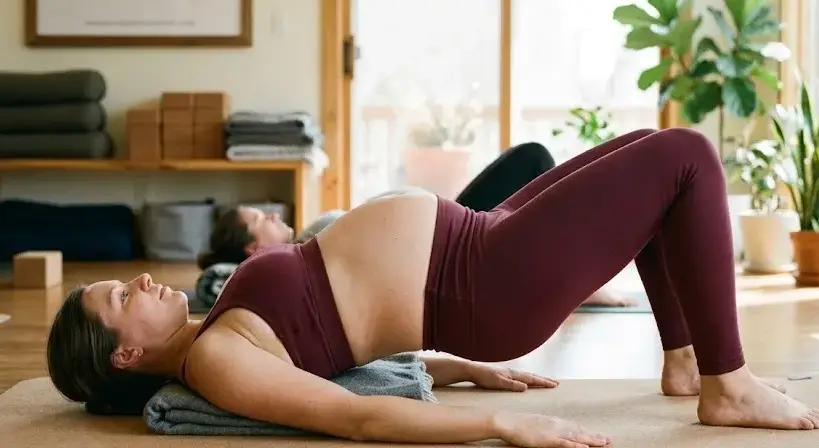
- Avoid supine positions after first trimester
- Maintain slow, controlled transitions
Which breathing techniques support pain relief during pregnancy?
Yoga for lower back pain during pregnancy UK integrates breathing techniques to reduce muscular tension and improve oxygenation.
Key techniques:
1. Diaphragmatic breathing
- Inhale deeply through the nose, expanding the ribcage
- Exhale slowly through the mouth
- Helps reduce lower back muscle tension
2. Ujjayi breathing (modified)
- Gentle nasal breathing with slight throat constriction
- Maintains rhythm during movement
3. Counted breathing
- Inhale for 4 counts, exhale for 6 counts
- Promotes relaxation and pain control
Clinical relevance:
- Improves oxygen delivery
- Reduces stress hormone levels
- Enhances mind-body coordination
How often should yoga and breathing be practised for results?
Yoga for lower back pain during pregnancy UK is most effective with consistent combined practice.
Recommended routine:
- Frequency: 3–4 times weekly
- Duration: 20–30 minutes
Structured session:
- Breathing warm-up: 5 minutes
- Yoga poses: 15 minutes
- Breathing + relaxation: 5–10 minutes
What are the clinical benefits of combining yoga and breathing?
Yoga for lower back pain during pregnancy UK shows improved outcomes when breathing techniques are included.
Documented benefits:
- Reduced pain intensity
- Improved posture and spinal alignment
- Lower stress and anxiety levels
- Better sleep quality
Research indicates that combining movement with breath control enhances neuromuscular efficiency and pain tolerance.
Are there risks or precautions when combining yoga and breathing?
Yoga for lower back pain during pregnancy UK must follow established safety practices.
Precautions:
- Avoid breath retention (no breath holding)
- Do not overexert during breathing exercises
- Stop if dizziness or discomfort occurs
Seek medical advice if:
- High-risk pregnancy
- Severe pelvic instability
- Pre-existing respiratory conditions
How does yoga compare with physiotherapy and other treatments?
Yoga for lower back pain during pregnancy UK complements clinical approaches.
Comparison overview:
| Method | Focus | Application |
| Yoga + breathing | Holistic relief | Mild to moderate pain |
| Physiotherapy | Targeted rehab | Moderate to severe pain |
| Support aids | External stabilisation | Daily function |
Many individuals also explore related areas such as pregnancy stretches for upper back pain, yoga for round ligament pain, and hip pain relief exercises during pregnancy.
Conclusion
Yoga for lower back pain during pregnancy UK combines physical movement with controlled breathing to provide a structured, evidence-based pain management approach. Consistent practice supports both musculoskeletal function and relaxation. For nerve-related discomfort, consider integrating Yoga for sciatica nerve pain home exercises UK into a broader routine.
FAQs
Which breathing technique is best during pregnancy yoga?
Diaphragmatic breathing is most recommended due to its safety and effectiveness.
Can breathing alone reduce back pain?
It helps reduce tension but is most effective when combined with movement.
Is breath holding safe during pregnancy yoga?
No, breath retention should be avoided.
How long should breathing exercises last?
5–10 minutes per session is sufficient.
Can beginners practise these techniques safely?
Yes, if done slowly and with proper guidance.
Sources
https://www.firsttofourthyoga.co.uk/postnatal-pregnancy-yoga-blog/5-yoga-poses-for-back-pain
https://www.spinecorrectioncenter.com/10-yoga-poses-to-relieve-back-pain-during-pregnancy/
https://www.youtube.com/watch?v=VKIGqEEtW4o
https://www.vitality-physio.co.uk/5-exercises-for-back-pain-in-pregnancy/
https://www.nhs.uk/live-well/exercise/pilates-and-yoga/prenatal-and-postnatal-exercise/
https://www.fernrossyoga.co.uk/blog/yoga-to-relieve-lower-back-pain-in-pregnancy
https://www.moov.co.in/en/adult/5-yoga-poses-to-relieve-back-pain-in-pregnancy/
https://www.mkuh.nhs.uk/patient-information-leaflet/back-and-pelvic-girdle-pain-in-pregnancy-advice-and-exercise
https://pmc.ncbi.nlm.nih.gov/articles/PMC6710668/