
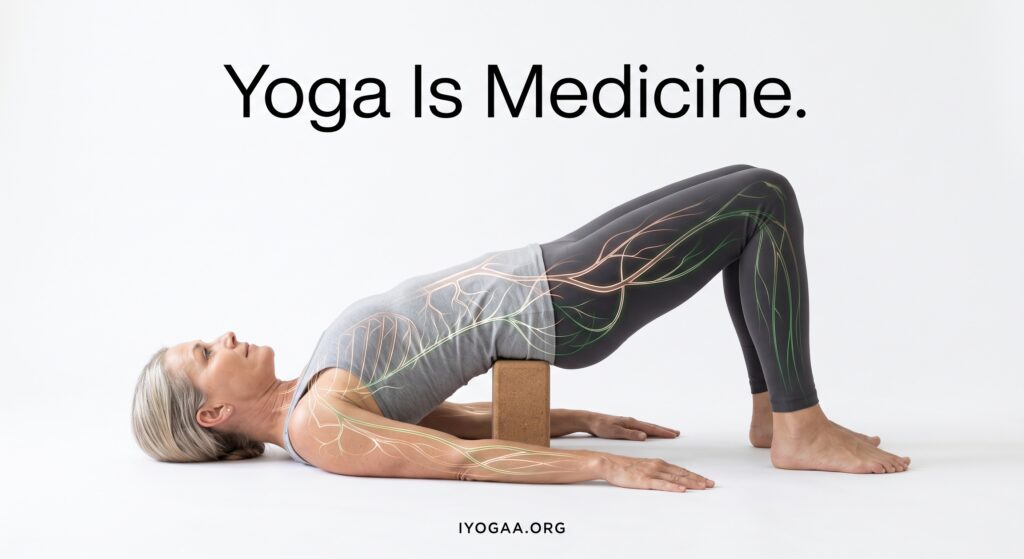
For decades, modern medicine has treated lifestyle diseases—such as hypertension, type 2 diabetes, and cardiovascular disease—primarily through pharmacology. While medication is often necessary, it frequently treats the symptom rather than the systemic root cause. As a result, patients are left managing chronic conditions rather than actively reversing them.
At iyogaa.org, we approach yoga not as a fitness routine, but as a precise, clinical intervention. Through the lens of interoceptive yoga, we recognize that the body has a profound capacity to heal itself when the nervous system is provided with the correct biological inputs.
Here is how targeted interoceptive practice acts as powerful medicine, addressing the physiological origins of modern lifestyle diseases.
The Root Cause: Chronic Autonomic Dysregulation
To understand how yoga functions as medicine, we must first look at the biological environment that breeds lifestyle diseases. Conditions like metabolic syndrome, hypertension, and autoimmune disorders share a common underlying driver: chronic systemic inflammation, fueled by a dysregulated autonomic nervous system.
In our modern, high-stress environments, the sympathetic nervous system (your “fight-or-flight” response) is chronically activated. This continuous activation overworks the hypothalamic-pituitary-adrenal (HPA) axis, flooding the body with cortisol and adrenaline. Over time, elevated cortisol causes insulin resistance, raises blood pressure, and triggers rampant inflammation. Your body is locked in a state of survival, preventing cellular repair and metabolic regulation.
You cannot reverse lifestyle disease while the body is trapped in a biological state of perceived threat.
Interoception: The Antidote to Systemic Inflammation
This is where interoceptive yoga transitions from a mindful practice into a medical intervention. Interoception is the nervous system’s ability to sense and process the internal state of the body. By practicing targeted, high-fidelity interoception, we can manually override the body’s chronic stress response.
When you engage in slow, deliberate movement paired with hyper-focused internal awareness, you actively stimulate the vagus nerve. This primary nerve of the parasympathetic nervous system acts as the biological brake pedal to the sympathetic stress response.
Clinically, high vagal tone is inversely correlated with inflammation. By directing your attention inward—feeling the precise stretch of fascia, the exact rhythm of your heartbeat, or the expansion of your diaphragm—you send potent signals of safety to the brainstem. This “bottom-up” neurological signaling immediately lowers heart rate, reduces blood pressure, and halts the overproduction of cortisol, creating the biological environment required for cellular repair.
Targeted Interventions for Specific Outcomes
Interoceptive yoga allows us to prescribe specific practices for specific physiological outcomes, much like a targeted medical therapy.
- Hypertension and Cardiovascular Health: Practices focusing on prolonged exhalations and restorative postures (like supported inversions) maximize baroreceptor sensitivity in the neck and chest. This directly lowers blood pressure and trains the cardiovascular system to operate with less resistance and strain.
- Metabolic Syndrome and Type 2 Diabetes: Deep, active abdominal breathing and targeted spinal twists mechanically stimulate the digestive organs and the vagal pathways associated with the gut-brain axis. Combined with the reduction of systemic cortisol, this improves insulin sensitivity and helps regulate blood glucose levels.
- Chronic Pain and Inflammation: By refining interoceptive mapping in the insular cortex, practitioners learn to decouple the physical sensation of pain from the emotional panic of pain. This reduces the systemic inflammatory response, alleviating the symptoms of conditions like fibromyalgia and arthritis.
The IYOGAA.ORG Prescription
Reversing lifestyle disease requires more than just exercising; it requires re-educating your nervous system. At iyogaa.org, we provide the tools to administer this biological medicine.
By utilizing interoceptive yoga, you are not merely stretching muscles. You are rewriting the neurological feedback loops that govern your hormones, your heart, and your metabolism. You are taking active, clinical control of your internal environment, leveraging the science of your own biology to reclaim your health.
Research References
- Bower, J. E., & Irwin, M. R. (2016). Mind-body therapies and control of inflammatory biology: A descriptive review. Brain, Behavior, and Immunity, 51, 1-11. (Details how mind-body practices like yoga reduce circulating markers of systemic inflammation).
- Innes, K. E., Bourguignon, C., & Taylor, A. G. (2005). Risk indices associated with the insulin resistance syndrome, cardiovascular disease, and possible protection with yoga: A systematic review. Journal of the American Board of Family Medicine, 18(6), 491-519. (Provides clinical evidence for yoga’s efficacy in improving metabolic and cardiovascular markers).
- Streeter, C. C., Gerbarg, P. L., Saper, R. B., Ciraulo, D. A., & Brown, R. P. (2012). Effects of yoga on the autonomic nervous system, gamma-aminobutyric-acid, and allostasis in epilepsy, depression, and post-traumatic stress disorder. Medical Hypotheses, 78(5), 571-579. (Explores the exact mechanisms of vagal nerve stimulation and parasympathetic regulation through yoga).