
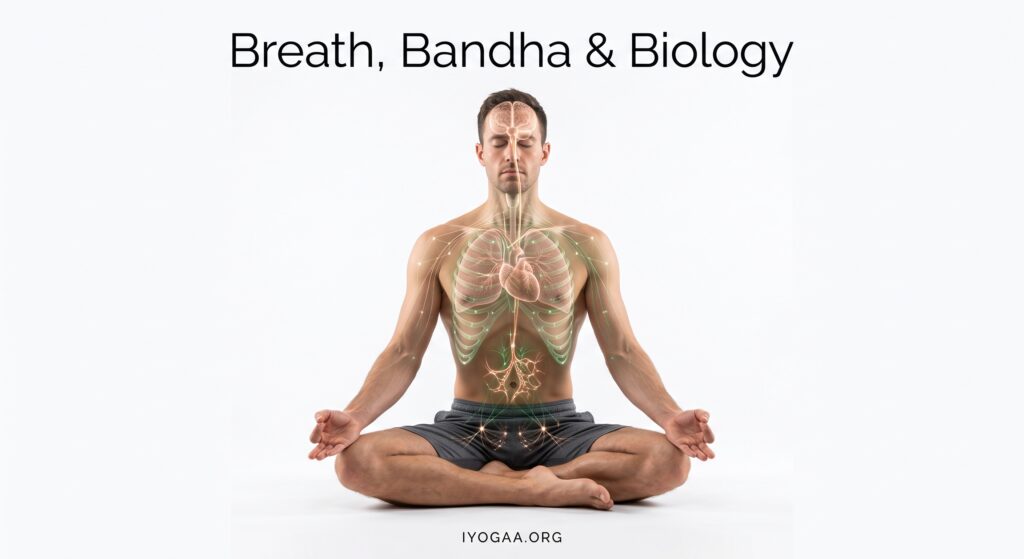
In modern fitness culture, an “advanced” yoga practice is almost exclusively defined by extreme flexibility or acrobatic strength. However, from a clinical and historical perspective, the true evolution of practice occurs internally. At iyogaa.org, we define advanced asana by the practitioner’s ability to exert conscious control over their autonomic nervous system, cellular metabolism, and neuro-endocrine pathways.
The most potent tools for this internal engineering are conscious respiration (Pranayama) and targeted neuromuscular engagements known as Bandhas. When viewed through the lens of interoceptive yoga, these ancient techniques are not mystical concepts—they are precise biological mechanisms for optimizing human energy.
The Biology of Conscious Respiration
To understand how to optimize energy, we must look at how the body produces it. Cellular energy—Adenosine Triphosphate (ATP)—relies on a delicate balance of oxygen and carbon dioxide.
When you practice slow, deliberate diaphragmatic breathing, you are doing more than just calming down; you are altering blood chemistry. By extending the exhalation and incorporating breath retention (Kumbhaka), you increase your tolerance to carbon dioxide. This slight elevation in CO2 triggers the Bohr effect, a physiological phenomenon where hemoglobin releases oxygen more readily to your brain and muscle tissues.
Simultaneously, the mechanical expansion of the lower lungs triggers stretch receptors that communicate directly with the vagus nerve, driving the nervous system into a parasympathetic (rest-and-repair) state. You are creating a biological environment of high oxygen availability and low metabolic demand—the definition of optimized energy.
Bandhas: The Neuromuscular Switches
If the breath acts as the fuel for your nervous system, the Bandhas (traditional body locks) act as the physical switches that direct that energy. Clinically, Bandhas are targeted, sustained isometric contractions of specific muscle groups that stimulate major nerve plexuses and manipulate blood pressure.
Through high-fidelity interoception, practitioners can activate three primary biological gateways:
1. Mula Bandha (The Root Lock) and the Pelvic Floor Engaging Mula Bandha involves the precise, upward contraction of the perineal muscles. Neurologically, this action stimulates the pudendal nerve and the parasympathetic nerve fibers located at the base of the spine. By creating a stable, engaged foundation at the pelvic floor, you prevent the unconscious “leakage” of biomechanical and neurological energy, grounding the nervous system in a state of safety and hyper-alertness.
2. Uddiyana Bandha (The Abdominal Lock) and the Vagus Nerve Performed on a complete exhalation, Uddiyana Bandha creates a powerful upward vacuum of the diaphragm and abdominal organs. This profound internal suction mechanically massages the enteric nervous system (the “second brain” in the gut) and heavily stimulates the vagal pathways running through the diaphragm. Biomechanically, it facilitates venous return, drawing blood back to the heart with minimal cardiac effort, resting the cardiovascular system while keeping the brain highly oxygenated.
3. Jalandhara Bandha (The Throat Lock) and the Baroreceptors By tucking the chin to the chest and elevating the sternum, practitioners compress the carotid sinuses in the neck. These sinuses contain baroreceptors—sensors that detect changes in blood pressure. The mechanical pressure of Jalandhara Bandha tricks these receptors into sensing a spike in blood pressure. The brain instantly responds by firing the vagus nerve to slow the heart rate and dilate blood vessels, producing a profound, immediate state of physiological calm.
The Synergy of Internal Practice
When combined within a posture, these three mechanisms—breath control, CO2 tolerance, and neuromuscular locks—create a state of optimized biological efficiency. The autonomic nervous system is quieted, the cardiovascular system is rested, yet the brain remains completely lucid and hyper-oxygenated.
This is the essence of interoceptive yoga. It is the transition from moving your skeletal muscles to consciously operating your neurobiology.
The IYogaa.org Approach
At iyogaa.org, we teach advanced practice not by giving you harder poses to perform, but by requiring deeper internal data to process. By mastering the biology of breath and the precision of the Bandhas, you gain the clinical tools to halt energy depletion, self-regulate your nervous system, and build profound metabolic resilience from the inside out.
Research References
- Jerath, R., Edry, J. W., Barnes, V. A., & Jerath, V. (2006). Physiology of long pranayamic breathing: neural respiratory elements may provide a mechanism that explains how slow deep breathing shifts the autonomic nervous system. Medical Hypotheses, 67(3), 566-571. (Details the interaction between stretch receptors in the lungs, vagal tone, and parasympathetic dominance).
- Mourya, M., Mahajan, A. S., Singh, N. P., & Jain, A. K. (2009). Effect of slow- and fast-breathing exercises on autonomic functions in patients with essential hypertension. The Journal of Alternative and Complementary Medicine, 15(7), 711-717. (Provides clinical backing for how targeted breath and neck position stimulate baroreceptors to lower heart rate and blood pressure).
- Bordoni, B., & Zanier, E. (2013). Anatomic connections of the diaphragm: influence of respiration on the body system. Journal of Multidisciplinary Healthcare, 6, 281-291. (Explores the mechanical and neurological impacts of diaphragmatic control, validating the biological mechanisms behind Uddiyana Bandha).