Best yoga poses for back pain refer to specific asanas that target spinal muscles, ligaments, and core stability to alleviate discomfort and improve function. These poses are clinically recommended in non-invasive back pain management protocols. How can structured yoga movements reduce mechanical stress on the spine while improving long-term mobility?
Key Takeaways
- Best yoga poses for back pain improve flexibility, strength, and posture
- Breathing techniques enhance effectiveness and safety
- Structured sequences support rehabilitation outcomes
- Consistency is critical for long-term relief
- Clinical guidance is recommended for severe conditions
What are the best yoga poses for back pain and how do they work?
Best yoga poses for back pain function by improving spinal flexibility, strengthening stabilizing muscles, and promoting circulation.
Key mechanisms include:
- Spinal decompression: Reduces pressure on intervertebral discs
- Muscle activation: Strengthens core and back muscles
- Postural correction: Aligns spine and pelvis
Common effective poses:
- Cat-Cow Stretch (spinal mobility)
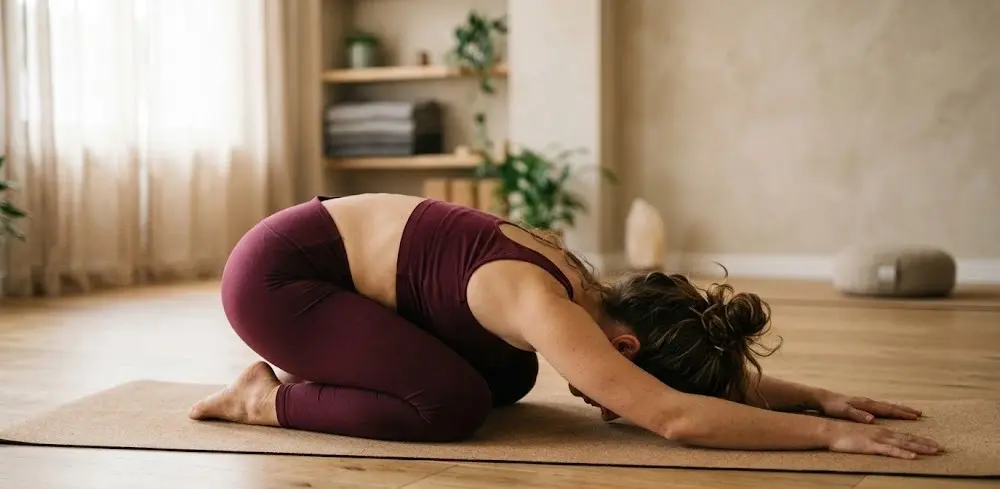
- Child’s Pose (lumbar release)
- Cobra Pose (extension strengthening)
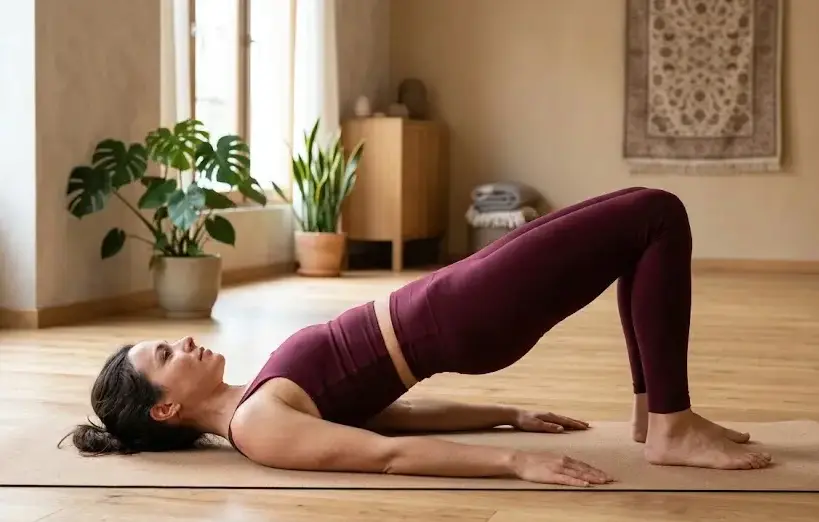
- Bridge Pose (glute and lower back support)
Which yoga poses are most effective for lower back pain relief?
Best yoga poses for back pain targeting the lower region focus on controlled extension and gentle stretching.
| Pose Name | Primary Benefit | Application Area |
| Bhujangasana | Strengthens spine | Lumbar extension |
| Setu Bandhasana | Stabilizes lower back | Glutes and core |
| Balasana | Relieves tension | Lumbar decompression |
| Marjariasana | Improves flexibility | Entire spine |
Clinical note: These poses are commonly included in rehabilitation routines for chronic lower back pain.
How should breathing techniques support best yoga poses for back pain?
Best yoga poses for back pain become more effective when combined with controlled breathing techniques that enhance muscle relaxation and spinal mobility.
Recommended breathing methods:
- Diaphragmatic breathing: Promotes deep core engagement and reduces tension
- Ujjayi breathing: Maintains rhythm and improves focus during poses
- Nasal breathing: Enhances oxygen efficiency and stability
Step-by-step breathing integration:
- Inhale deeply through the nose before entering a pose
- Exhale slowly while moving into the stretch
- Maintain steady breathing (4–6 seconds per cycle)
- Avoid breath holding during tension
Functional benefit: Controlled breathing reduces muscle guarding, allowing safer and deeper stretches.
How should beginners practice best yoga poses for back pain safely?
Best yoga poses for back pain beginners should follow structured progression and safety protocols.
Guidelines:
- Start with low-intensity poses (e.g., Child’s Pose)
- Maintain neutral spine alignment
- Avoid jerky or forced movements
- Hold each pose for 15–30 seconds
- Practice controlled breathing
Safety standards:
- Avoid deep forward bends in acute pain
- Consult a professional in cases of disc injury or sciatica
What is the correct sequence for practicing these yoga poses?
Best yoga poses for back pain are most effective when performed in a structured sequence.
Recommended 5-step sequence:
- Warm-up: Cat-Cow (1–2 minutes)
- Stretch: Child’s Pose (1 minute)
- Strengthen: Cobra Pose (5–8 repetitions)
- Stabilize: Bridge Pose (30 seconds hold)
- Cool down: Supine spinal twist
This sequence aligns with physiotherapy-based movement progression models.
How often should you practice yoga for back pain relief?
Best yoga poses for back pain should be practiced consistently for measurable results.
Recommended frequency:
- Beginners: 3–4 times per week
- Moderate cases: Daily short sessions (5–15 minutes)
- Maintenance: 4–5 sessions weekly
Evidence-based insight: Regular practice improves flexibility and reduces recurrence of pain episodes.
A related context often explored includes yoga for lower back pain beginners, 5 minute yoga routines, and spine alignment-focused practices.
Are there risks or contraindications with yoga for back pain?
Best yoga poses for back pain must be adapted based on individual conditions.
Contraindications include:
- Herniated discs
- Severe osteoporosis
- Post-surgical recovery
Risk mitigation:
- Avoid overextension
- Use props (blocks, cushions)
- Follow guided sessions when needed
Conclusion
Best yoga poses for back pain provide a structured, non-invasive method for improving spinal health and reducing discomfort through targeted movement, alignment, and controlled breathing. Consistent application within a safe framework enhances long-term musculoskeletal stability. For a progressive approach, integrating practices like yoga for lower back pain all levels ensures continuity and adaptability across experience levels.
FAQs
What type of yoga is best for back pain?
Hatha yoga and Iyengar yoga are most effective due to their focus on alignment and controlled movements.
What are the 4 asanas for back pain?
Cat-Cow, Child’s Pose, Cobra Pose, and Bridge Pose are four commonly recommended asanas.
What are the big 3 exercises for lower back pain?
The Big 3 include modified curl-up, side plank, and bird-dog exercises for core stability.
Can yoga permanently cure back pain?
Yoga helps manage and reduce back pain but may not permanently cure underlying medical conditions.
How quickly does yoga relieve back pain?
Initial relief can occur within 1–2 weeks, with significant improvement over consistent practice.
Sources
https://www.healthline.com/health/fitness-exercise/yoga-for-back-pain
https://spinehealth.org/article/yoga-poses-for-lower-back-pain/
https://www.iodex.co.in/health-wellness-pain/exercise-diet/yoga-poses-for-backache/
https://www.mayoclinic.org/healthy-lifestyle/adult-health/in-depth/back-pain/art-20546859
https://www.polarishealthcare.in/post/yoga-poses-back-pain-relief
https://www.drmaheshbagwe.com/blog/13-yoga-stretches-to-help-relieve-lower-back-pain/?bp=41182
https://www.yogajournal.com/poses/yoga-by-benefit/back-pain/military-sequence/
https://yogaselection.com/iyengar-yoga-for-lower-back-pain/