

A yoga routine for low back pain beginners refers to a guided set of gentle postures and breathing techniques aimed at reducing discomfort and improving spinal stability. It emphasizes controlled motion, alignment, and muscle activation. How can beginners safely start without aggravating pain? By following evidence-based sequences that prioritize safety, gradual progression, and proper technique.
Key Takeaways
- Focus on gentle, low-impact poses for safety
- Maintain proper spinal alignment during all movements
- Include breathing techniques for muscle relaxation
- Practice consistently with gradual progression
- Avoid pain-triggering movements and consult professionals if needed
What Is a Safe Yoga Routine for Low Back Pain Beginners?
A yoga routine for low back pain beginners typically includes low-intensity poses that minimize spinal strain while improving flexibility.
Core components:
- Neutral spine positioning
- Controlled range of motion
- Avoidance of deep forward bends initially
Common beginner poses:
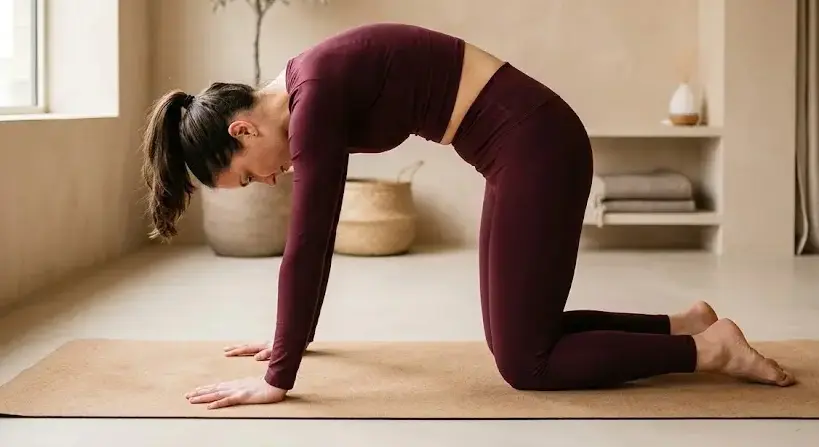
- Cat-Cow stretch
- Child’s Pose
- Supine knee-to-chest stretch
Clinical note: Guidelines from rehabilitation practices recommend starting with pain-free movements and avoiding sudden transitions
Which Yoga Poses Are Most Effective for Beginners?
A yoga routine for low back pain beginners should focus on poses that activate core stabilizers and reduce lumbar pressure.
Recommended poses:
| Pose | Benefit |
| Cat-Cow | Improves spinal mobility |
| Bridge Pose | Strengthens glutes and lower back |
| Child’s Pose | Relieves tension in lumbar spine |
Execution tips:
- Move slowly with breath
- Maintain alignment
- Stop if pain increases
How Should Beginners Structure a Daily Routine?
A yoga routine for low back pain beginners is most effective when structured consistently and progressively.
Sample 10-minute routine:
- Warm-up (2 minutes): Cat-Cow
- Stretch (4 minutes): Child’s Pose, knee-to-chest
- Strengthen (3 minutes): Bridge Pose
- Relaxation (1 minute): Deep breathing
Frequency:
- 5–6 days per week
- Gradual increase in duration
What Breathing Techniques Support Pain Relief?
A yoga routine for low back pain beginners must include breathing techniques to enhance muscle relaxation and reduce tension.
Effective methods:
- Diaphragmatic breathing
- Inhale deeply through nose
- Expand abdomen, not chest
- 4-4 breathing pattern
- Inhale for 4 seconds
- Exhale for 4 seconds
Benefits:
- Reduces muscle guarding
- Improves oxygen flow
- Supports nervous system regulation
What Precautions Should Beginners Follow?
Safety protocols are essential for beginner yoga routines targeting lower back pain.
Key precautions:
- Avoid twisting movements in early stages
- Do not push into pain
- Use props like cushions or yoga blocks
Medical guidance:
- Consult a professional if pain persists beyond 4–6 weeks
- Follow structured rehabilitation if diagnosed with chronic conditions
Can This Routine Be Done at Home Effectively?
Beginners can safely follow a yoga routine for low back pain at home with minimal gear.
Requirements:
- Non-slip yoga mat
- Quiet, stable surface
- Proper posture awareness
Related context: Many beginners also explore 5-minute yoga routines, hip-opening sequences, and guided video sessions for additional support.
Conclusion
A yoga routine for low back pain beginners provides a structured, low-risk approach to improving spinal health through controlled movement and breathing. Consistency, correct technique, and gradual progression are critical for long-term results. For specialized needs, such as prenatal care, consider exploring yoga for lower back pain during pregnancy as a targeted adaptation.
FAQs
Can beginners do yoga for back pain?
With proper instruction, beginners can safely engage in yoga for back pain using gentle movements.
Which yoga is best for lower back pain?
Gentle styles focusing on stretching and core stability, such as Hatha yoga, are most effective.
What are the big 3 exercises for lower back pain?
The “Big 3” include modified curl-up, side plank, and bird-dog for core stabilization.
How often should beginners do yoga for back pain?
Practicing yoga in brief sessions 5–6 times weekly supports consistent results.
Is breathing important in yoga for back pain?
Yes, controlled breathing reduces muscle tension and enhances the effectiveness of movements.
Sources
https://www.healthline.com/health/fitness-exercise/yoga-for-back-pain
https://www.spine-health.com/blog/3-beginner-yoga-poses-lower-back-pain-relief
https://www.drmaheshbagwe.com/blog/13-yoga-stretches-to-help-relieve-lower-back-pain/?bp=41182
https://www.nytimes.com/2025/06/16/well/move/yoga-poses-low-back-pain.html
https://www.yogajournal.com/practice/15-minute-morning-yoga-for-lower-back-pain/
https://jasonyoga.com/2016/10/07/backpain/
https://www.mayoclinic.org/healthy-lifestyle/adult-health/in-depth/back-pain/art-20546859