
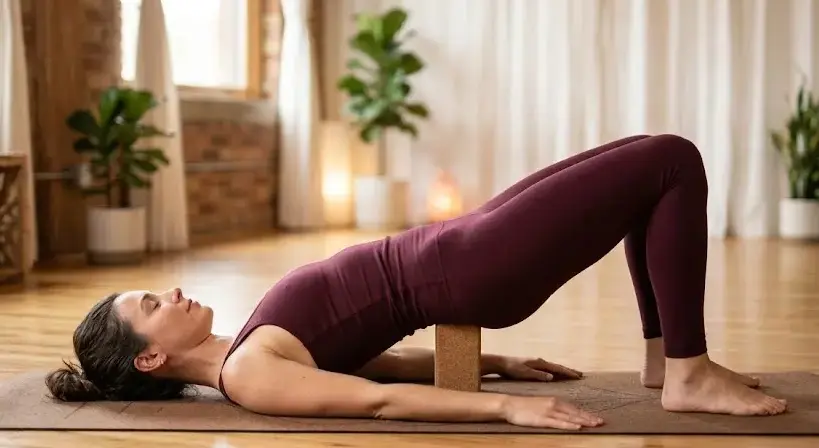
A gentle yoga routine for lower back pain is a sequence of controlled stretches and postures that aim to relieve tension, improve flexibility, and stabilize the spine. It is often employed as a conservative, non-invasive option in musculoskeletal care. Can consistent, low-intensity movement reduce pain without aggravating the condition? Evidence suggests it can when performed correctly.
Key Takeaways
- Gentle yoga improves flexibility, strength, and spinal alignment
- Safe poses reduce strain while promoting recovery
- Breathing techniques enhance pain relief and relaxation
- Consistency is critical for measurable improvement
- Suitable for beginners and non-severe back conditions
How can a gentle yoga sequence relieve lower back pain, and what is its mechanism?
A gentle yoga routine for lower back pain works by combining mobility exercises, muscle activation, and breath control to reduce stiffness and improve circulation.
Key mechanisms include:
- Stretching tight muscles (hamstrings, hip flexors)
- Strengthening core stabilizers
- Enhancing spinal alignment
Clinical relevance:
- Often included in rehabilitation programs
- Recommended alongside physiotherapy for chronic pain management
Which poses are included in a gentle yoga routine for lower back pain?
A gentle yoga routine for lower back pain typically includes beginner-safe poses that minimize strain.
Core poses:
- Child’s Pose (Balasana) – decompresses the spine
- Cat-Cow Stretch – improves spinal flexibility
- Knee-to-Chest Pose – releases lower back tension
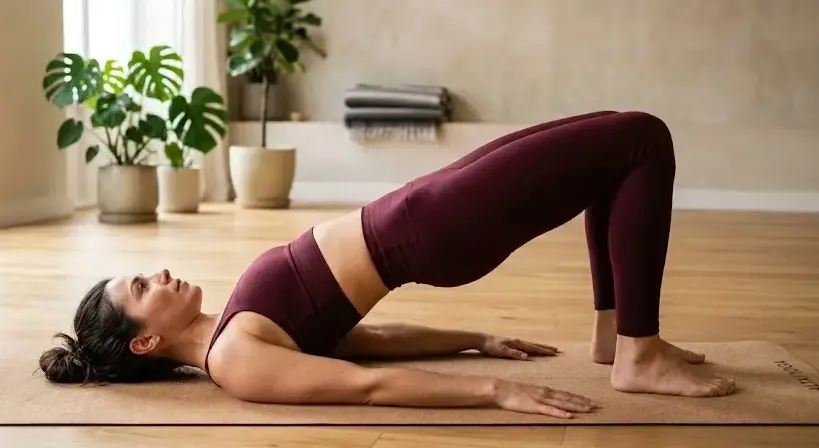
- Bridge Pose (Setu Bandhasana) – strengthens glutes and back
- Supine Twist – enhances spinal rotation
Best practice:
- Hold each pose for 20–30 seconds
- Maintain slow, controlled breathing
How should beginners perform a gentle yoga routine for lower back pain safely?
A gentle yoga routine for lower back pain should follow structured safety protocols to avoid injury.
Guidelines:
- Use a firm, non-slip mat
- Avoid overstretching or pain triggers
- Keep movements slow and controlled
Step-by-step structure:
- Warm-up (2 minutes): light stretches
- Core poses (5–10 minutes)
- Cool-down with relaxation
Medical note:
Get evaluated by a healthcare provider if pain remains after 4–6 weeks.
What breathing techniques enhance a gentle yoga routine for lower back pain?
A gentle yoga routine for lower back pain is significantly more effective when combined with controlled breathing techniques.
Recommended techniques:
- Diaphragmatic breathing:
- Inhale deeply through the nose
- Expand the abdomen
- Exhale slowly through the mouth
- 4-6 breathing pattern:
- Inhale for 4 seconds
- Exhale for 6 seconds
Benefits:
- Reduces muscle guarding
- Improves oxygen delivery
- Enhances relaxation response
How often should a gentle yoga routine for lower back pain be practiced?
A gentle yoga routine for lower back pain should be practiced consistently for measurable results.
| Frequency | Duration | Expected Outcome |
| Daily | 10–15 minutes | Improved flexibility |
| 3–4 times/week | 15–20 minutes | Pain reduction |
| Long-term | Ongoing | Injury prevention |
Industry recommendation:
Most rehabilitation guidelines suggest at least 150 minutes of moderate physical activity weekly, including flexibility training.
What conditions benefit most from a gentle yoga routine for lower back pain?
Low-intensity yoga routines benefit a range of mild lower back conditions.
Common applications:
- Muscle strain
- Poor posture-related pain
- Sedentary lifestyle stiffness
- Mild disc-related discomfort
Related interest:
People exploring this topic also look into yoga for lower back pain beginners, 5-minute routines, and hip-focused mobility exercises.
Conclusion
A structured gentle yoga routine for lower back pain provides a safe, evidence-based approach to improving spinal health and reducing discomfort. Consistency, correct technique, and controlled breathing form the foundation of effective practice. For expanded techniques and progression, consider integrating yoga stretches for lower back pain into a broader routine.
FAQ
Can a gentle yoga routine for lower back pain be done daily?
Yes, daily practice with low intensity is safe and improves long-term outcomes.
How long before results are noticeable?
Many individuals observe progress within 2–4 weeks of steady practice.
Is yoga safe for severe back pain?
It depends on the condition; medical consultation is recommended for severe or acute pain.
What time of day is best for practice?
Morning or evening sessions are effective, depending on individual comfort and routine.
Do I need equipment for this routine?
A yoga mat and optional cushion for support are sufficient.
Sources
https://www.nytimes.com/2025/06/16/well/move/yoga-poses-low-back-pain.html
https://yoga15.com/article/yoga-for-back-pain-sequence/
https://www.drmaheshbagwe.com/blog/13-yoga-stretches-to-help-relieve-lower-back-pain/?bp=41182
https://www.spine-health.com/video/gentle-yoga-poses-lower-back-pain-relief-video
https://www.healthline.com/health/fitness-exercise/yoga-for-back-pain
https://www.youtube.com/watch?v=VlUfKp1LKpc
https://www.mayoclinic.org/healthy-lifestyle/adult-health/in-depth/back-pain/art-20546859
https://artoflivingretreatcenter.org/yoga-positions-back-pain/