
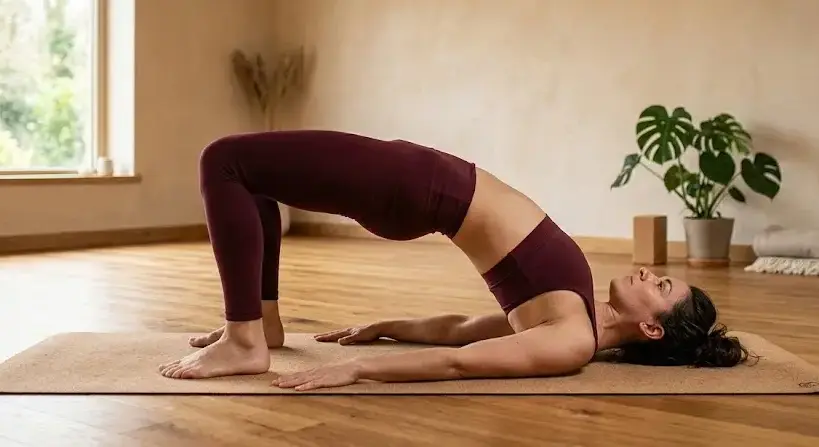
How to do yoga refers to the structured application of breath, muscular activation, and spinal loading in a defined sequence. Most home practitioners focus on stretching sequences, but stiffness returning within hours indicates a sequencing fault. Specifically, spinal movement is introduced before stabilising systems are engaged, leading to repeated low-level strain rather than resolution.
Key Takeaways
- Sequence determines outcome; stretching without stabilisation reinforces instability
- Breath mechanics regulate baseline muscle tone before loading the spine
- Stabiliser activation must precede any movement for sustained stiffness reduction
- Tightness often indicates protection, not lack of flexibility
- Evaluate routines based on stiffness return time, not immediate sensation
What does “how to do yoga” actually require structurally?
How to do yoga correctly requires a three-phase sequence: neurological preparation, stabiliser activation, and controlled spinal loading. Skipping the first two phases leads to compensation patterns rather than structural improvement.
This can be broken down into:
| Phase | Function | Measurable Indicator | Outcome if Skipped |
| Breath regulation | Downregulates tone, sets intra-abdominal pressure | Slower exhale (>5 sec) | High baseline tension |
| Stabiliser activation | Engages deep core and spinal support | Ability to maintain neutral spine under low load | Segmental instability |
| Spinal loading | Applies movement or stretch | Controlled range without collapse | Over-reliance on passive tissues |
A typical home routine that begins directly with forward bending bypasses the first two phases entirely.
Why does stiffness return after morning practice?
How to do yoga poorly often results in temporary symptom relief because superficial tissues are stretched while deep stabilisers remain inactive.
In adults aged 30–55 who practise 3–5 times weekly at home, a common pattern is:
- Stretching posterior chain muscles reduces perceived tightness
- Lack of stabiliser engagement allows micro-instability during daily activity
- The nervous system reintroduces tension within 2–4 hours to protect the spine
Concrete example:
A practitioner performs 15 minutes of flexibility-focused work before work. By mid-morning desk sitting, lumbar stiffness returns because no anterior core engagement was established to support prolonged sitting posture.
How should you sequence a morning routine differently?
How to start yoga at home for structural correction requires reversing the typical order: activation precedes movement.
A corrected sequence:
- Breath-led regulation (3–5 minutes)
- Supine or seated breathing with extended exhale
- Target: reduce accessory muscle dominance
- Low-load stabiliser activation (5–8 minutes)
- Focus on deep core engagement without spinal movement
- Indicator: ability to maintain neutral alignment while breathing
- Gradual spinal loading (8–12 minutes)
- Introduce movement only after control is established
- Range is secondary to control quality
- Optional mobility work (final phase)
- Only if stability is maintained under movement
This sequence is used in rehabilitation settings for non-specific lower back stiffness, where load tolerance is built before range is expanded.
What is the non-obvious mistake in most beginner routines?
How to do yoga is often misunderstood as increasing range of motion, but stiffness in this population is frequently a stability deficit, not a flexibility limitation.
The non-obvious insight:
Tightness is often a protective response to instability, not a restriction to be stretched.
Comparison:
| Approach | Primary Target | Short-Term Effect | Long-Term Outcome |
| Stretch-first routine | Muscles | Immediate relief | Recurring stiffness |
| Activation-first routine | Stabilisers | Slower initial change | Sustained reduction |
| Mixed but unstructured | Inconsistent | Variable | Plateau |
Application:
A home practitioner focusing only on flexibility may increase lumbar range but decrease control, increasing reliance on passive structures such as ligaments.
When does this method work—and when does it not?
Beginners yoga tips often assume uniform benefit, but sequencing adjustments apply only under specific conditions.
This method is effective when:
- Stiffness is non-specific and recurring
- Symptoms reduce temporarily after movement
- No sharp or radiating pain is present
It is not appropriate when:
- Pain increases during low-load activation
- There is loss of strength or sensation in limbs
- Stiffness is constant and unresponsive to movement
Trade-off:
Activation-first routines feel less immediately effective because they do not prioritise stretch sensation. However, they produce more stable outcomes over weeks rather than hours.
How do you evaluate if your routine is correctly structured?
Yoga basics should include measurable feedback, not subjective feeling alone.
Use this evaluation framework:
- Time to stiffness return
- Target: extends beyond 4–6 hours post-practice
- Control under daily load
- Example: maintaining neutral spine during 30 minutes of sitting
- Breath consistency under movement
- Indicator: no breath holding during spinal transitions
- Reduced need for repeated stretching
- Fewer corrective sessions during the day
Related search context:
Many practitioners searching for “beginners yoga tips” or “easy yoga guide” are directed toward pose libraries, but these do not address sequencing errors, which is the primary issue in this population.
Conclusion
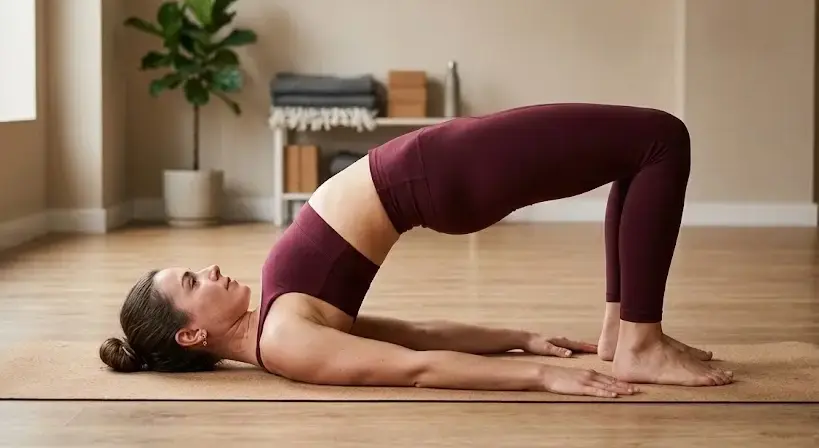
How to do yoga for persistent stiffness requires restructuring the sequence: breath regulation, then stabiliser activation, then spinal loading. This applies directly to home practitioners experiencing recurring stiffness despite regular practice. Redesign your morning yoga excercise by changing order, not poses.
FAQ
How to do yoga as a beginner?
Begin with breath regulation and stabiliser activation before introducing any spinal movement.
Can yoga help with nerve damage?
Only under clinical guidance; general routines do not address nerve-specific conditions.
Which yoga is best for IBS?
Breath-focused routines that regulate the nervous system are typically used.
Which yoga is best for osteoporosis?
Low-load stabilisation and controlled loading are prioritised over flexibility work.
Sources
https://www.verywellfit.com/essential-yoga-poses-for-beginners-3566747
https://www.yogabasics.com/practice/yoga-for-beginners/
https://www.yogajournal.com/poses/
https://www.wikihow.com/Perform-Yoga
https://jadeyoga.com/blogs/news/yoga-for-beginners-7-tips-for-starting-yoga-for-the-first-time
https://www.youtube.com/watch?v=s2NQhpFGIOg