Yoga pose names and instructions define positions and entry methods, but they do not define sequencing logic. For practitioners experiencing recurring lower back stiffness, the issue is not pose selection but the order in which stabilisers, breath, and load are introduced. This distinction determines whether the spine is prepared for movement or repeatedly exposed to unsupported range.
Key Takeaways
- Sequence determines outcome; poses alone do not address stiffness patterns
- Stabiliser activation must precede any spinal loading in morning routines
- Breath mechanics directly influence core engagement and spinal control
- Common poses produce different results based on neuromuscular preparation
- Reduced immediate stretch sensation indicates improved load distribution, not regression
What do yoga pose names and instructions fail to address in sequencing?
Yoga pose names and instructions describe external form, not internal readiness. A spine entering extension or flexion without prior stabiliser engagement distributes load into passive structures—ligaments and joint capsules—rather than controlled muscular support.
Common gap in home practice (30–55 age group, morning sessions):
- Movement begins with range-focused shapes (e.g., cobra pose yoga, downward dog yoga pose)
- Breath is reactive rather than pre-set
- No segmental control of lumbar-pelvic region before loading
- Stabilisers (transverse abdominis, multifidus) remain under-recruited
Concrete example:
A practitioner moves from child’s pose yoga directly into cobra pose yoga within 60–90 seconds of starting practice. The lumbar spine extends before deep stabilisers activate, resulting in temporary mobility but stiffness returning within 2–3 hours.
Which phase of a morning routine requires restructuring first?
Yoga pose names and instructions must be preceded by a pre-loading phase, not replaced. This phase determines whether subsequent poses reinforce stability or compensate for its absence.
Three-phase morning structure:
| Phase | Duration | Primary Function | Measurable Indicator |
| Pre-loading activation | 3–5 min | Stabiliser engagement + breath regulation | Controlled exhale ≥ 6 seconds without rib flare |
| Controlled mobility | 5–8 min | Segmental spinal movement | No lumbar collapse in transition |
| Loaded positions | 5–10 min | Weight-bearing + range | Stable pelvis under load |
Non-obvious insight:
Most plateaued practitioners skip phase one entirely. They begin at phase two (mobility), assuming stiffness requires stretching, when the issue is insufficient stabilisation before movement.
How does breath function as a neurological primer?
Yoga pose names and instructions assume breath accompanies movement, but in this context, breath precedes it. Controlled exhalation activates deep stabilisers through intra-abdominal pressure regulation.
Applied method (before any pose):
- Supine or quadruped position
- Inhale through nose (3–4 seconds) without rib lift
- Exhale slowly (6–8 seconds), maintaining abdominal tension
- Pause 2 seconds before next inhale
Measured effect:
EMG studies show increased activation of transverse abdominis during prolonged exhalation phases compared to passive breathing.
Application example:
Before entering downward dog yoga pose, performing 5 breath cycles reduces lumbar shear by improving core engagement, especially in practitioners with sedentary work patterns.
Why do common poses reinforce stiffness instead of reducing it?
Yoga pose names and instructions are often applied symmetrically, but stiffness patterns are asymmetrical. Without stabiliser control, poses amplify dominant movement strategies.
Comparison of execution quality:
| Pose | Without stabiliser prep | With stabiliser prep | Outcome after 2–3 hours |
| Cobra pose yoga | Lumbar compression | Distributed extension across thoracic spine | Reduced stiffness recurrence |
| Downward dog yoga pose | Hamstring dominance, lumbar flexion | Hip-driven movement, neutral spine | Improved posterior chain tolerance |
| Child’s pose yoga | Passive flexion | Active decompression with breath | Sustained relief vs temporary |
Insight:
The same pose produces opposite outcomes depending on pre-activation. The issue is not the pose itself but the order of neuromuscular engagement.
When does this restructuring approach not work?
Yoga pose names and instructions reorganised with stabiliser sequencing are effective for non-specific stiffness, not structural pathology.
Limitations:
- Acute disc injury with nerve symptoms (radiating pain below knee)
- Post-surgical recovery phases requiring medical protocols
- Inflammatory conditions (e.g., morning stiffness > 60 minutes consistently)
Trade-off:
This method reduces immediate “stretch sensation” because activation precedes range. Practitioners may perceive less mobility initially, but objective stiffness recurrence decreases over repeated sessions.
How should a practitioner redesign their existing routine today?
Yoga pose names and instructions should remain unchanged; only their entry point within the sequence shifts.
Immediate restructuring model:
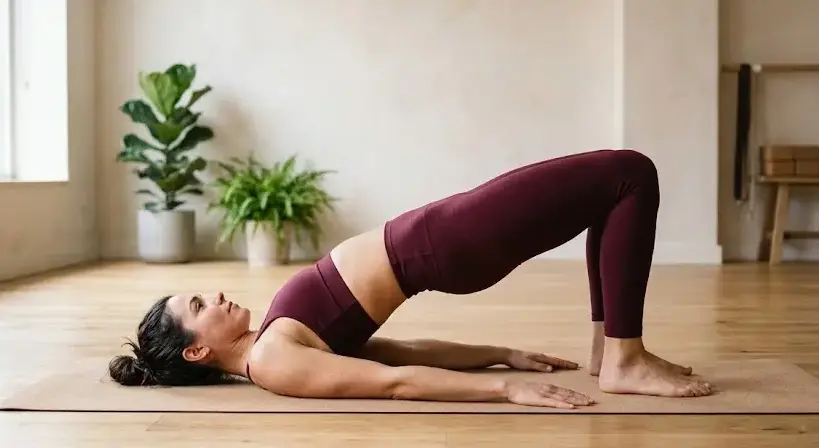
- Insert 3–5 minutes of breath-led stabiliser activation before any pose
- Delay cobra pose yoga and downward dog yoga pose until after controlled mobility
- Use child’s pose yoga as a reset between loaded positions, not as an entry pose
Applied scenario:
A 40-year-old desk worker practising 4 mornings/week shifts cobra pose from minute 2 to minute 8 of the session. Within 10–14 days, stiffness duration reduces from 3 hours to under 60 minutes post-practice.
Related context:
Readers often compare this issue to “yin yoga poses” for stiffness relief. The distinction is that passive holds do not address pre-loading stabilisation, which is the limiting factor here.
Conclusion
This framework reorganises yoga pose names and instructions by inserting stabiliser activation before spinal loading, not by changing poses. It applies directly to home morning routines where stiffness returns within hours. For practical restructuring, review your current sequence of yoga poses and shift activation to the first phase.
FAQ
Why does stiffness return after yoga practice?
Because spinal movement occurs before stabilisers activate, leading to temporary mobility without structural support.
Should I stop doing cobra pose yoga?
No; reposition it after activation and controlled mobility phases.
How long should the activation phase last?
Three to five minutes with controlled exhalation cycles is sufficient.
Is downward dog yoga pose harmful for the lower back?
Only when performed without prior stabiliser engagement and hip control.
Can child’s pose yoga replace activation work?
No; it provides passive flexion, not active stabiliser recruitment.
Sources
https://www.mea.gov.in/yoga-postures-17.htm
https://www.yogabreezebali.com/blog/yoga-poses/
https://pocketyoga.com/pose/
https://www.verywellfit.com/essential-yoga-poses-for-beginners-3566747
https://srisrischoolofyoga.org/na/blog/10-best-yoga-poses-for-beginners/
https://liforme.com/blogs/blog/30-standing-yoga-poses
https://www.yogateket.com/blog/yoga-poses-names-sanskrit-pranayama
https://myyogateacher.com/yoga-asana
https://seattleyoganews.com/15-yoga-poses-and-their-benefits-to-your-body/
https://www.artofliving.org/in-en/yoga/beginners/beginner-yoga-asanas-for-everyday